

How a Rebrand Changes Who’s on Your Team (for the Better)
By Luke Faccini | Founder, Sponge | 27 years in brand strategy | Author, The Humming Team
Three months after we rebranded Tom’s business from the foundations up, five team members had quietly left. Including his business partner. None of them left badly. Twelve months on, the business had gone from ninth in their city to first.
This is what a rebrand actually does to the people around you.
View this post on Instagram
The cafe, the energy, and what nobody could name
Tom and his business partner had inherited the business their grandfathers built.
Three generations in. A name that meant something in their city.
And the energy was bleeding out of the room.
I’d known Tom for a while. Knew his drive. Knew the weight he was carrying. So when he asked me to sit down with them at a cafe near their office, I felt the tension before either of them spoke.
Five people on the team had set the tone. Not the loudest. Not the worst performers on paper. Just the ones the superstars were quietly carrying.
The good people had stopped trying as hard. Not because they didn’t care. Because they’d run out of energy to keep covering.
Tom could feel it. He’d inherited it. He didn’t know how to name it.
The values on the wall were the kind of words you’d find on any company’s website. Confident. Generic. They couldn’t fire for fit. They couldn’t hire for fit. The standard had become whatever the team was already doing.
A magnet is a magnet. It can’t help but pull. The only difference is the strength.
Tom’s brand wasn’t broken. It was pulling. Just not hard enough. And not the right people.
Brand isn’t what you look like. It’s how you’re experienced.
Sixteen years ago I picked up a book called Delivering Happiness by Tony Hsieh, the founder of Zappos. One of those penny drop moments.
Hsieh showed me that your culture is your brand.
Not a slogan. Not a tagline. The lived experience of what it’s like to deal with you and every member of your team. That’s what the market actually feels.
Good design is table stakes. It earns you a seat. It doesn’t fill your team with the right people.
What fills your team with the right people is meaning. The brand that means something specific to specific people becomes magnetic to those people. The brand that tries to mean something to everyone ends up meaning very little to anyone in particular.
That’s the difference between a strong magnet and a weak one. Not how it looks. What it carries.
This is the principle we worked through ourselves at Sponge, and the principle behind our purpose-led decisions over the years. The lived meaning of a brand isn’t separate from how the business operates. They’re the same thing.
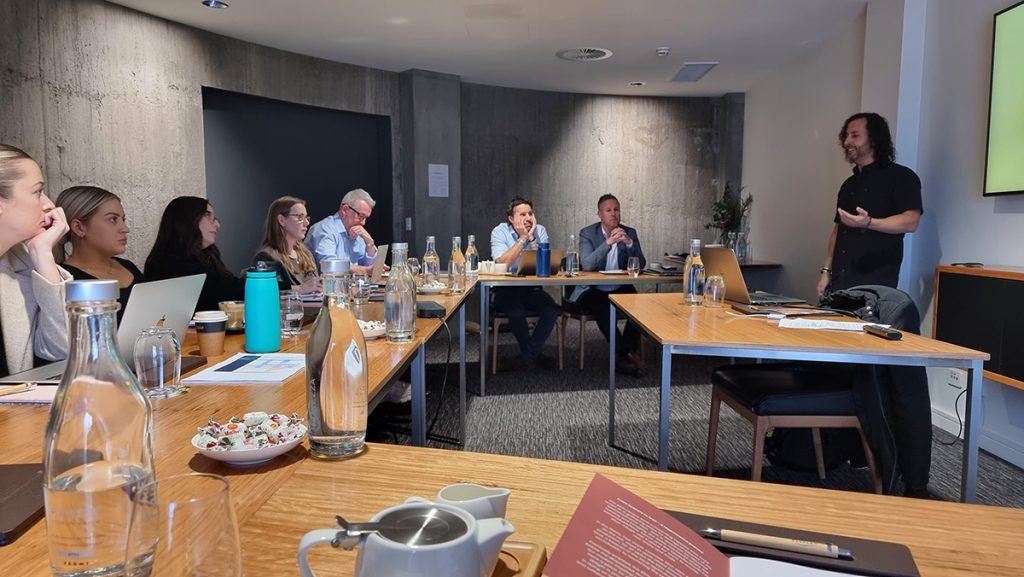
Working through the foundations with Tom’s leadership team.
Why your magnet feels strong some weeks and weak others
Most brands don’t operate in a vacuum. The market does.
Sometimes the right people are drawn to you. Other times you cannot attract anyone to save your life.
And on the other side, people are pulled away who you never thought would leave.
You’re left wondering what the hell is going on.
The truth is, a magnet is a magnet. It can’t help but pull. The only difference is the strength.
Sometimes it feels like yours is pulling strong, but that’s because at that moment it’s in a vacuum.
As soon as stronger brands enter the space, they pull all the top talent out of the pool you were drawing from. Including some of the people on your team.
This is why you lose people. Not because you did anything wrong. Because someone else got stronger. And you didn’t see it because you were measuring yourself against yourself.
Tom’s brand had been competing in a smaller, slower vacuum for three generations. The reputation his grandfathers built was holding the door open. But the market had changed around him. Stronger magnets had entered the space. The fact that he could feel something off but couldn’t name it meant he was watching his magnet get out-pulled in real time.
What happened in three months
We rebranded the business from the foundations up.
Three months later the five had self-selected out. No awkward conversations. No blow-ups. They didn’t fit the new standard so they quietly left.
Including his business partner.
That one I was worried about. I’d seen co-owner tension stall businesses for years. But the standard did the work.
A year on the business had gone from ninth in their city to first. Month on month growth they hadn’t seen in three generations.
I dropped in some months later. The room was alive. The energy was holding without me there.
The brand had become the magnet they always thought it was.
And the people it was pulling in were the people they’d been trying to hire for years.
I’ve watched this story land before
I’ve heard versions of this story from founders and seasoned business owners more times than I care to count.
When I shared Tom’s story with the Prudence team, they looked at each other knowingly. They said yes to the work in the room.
Months later they had their own version. (Read why Prudence had to rebrand)
The recognition is always the same. They’ve all worked with someone who has no business being there. They’ve all carried the weight that comes with it.
What most of them haven’t seen is what’s possible on the other side.
Imagine if they just left
We’ve all worked with people who’ve got no business being there.
Imagine what it would be like with them gone.
No fight. No awkward conversation. No HR. No documenting performance. No carrying the dread of the meeting around for weeks before having it.
They just felt the place wasn’t right for them anymore. So they left.
That’s what happened in Tom’s office. Five times in three months. Including his business partner.
It wasn’t engineered. It wasn’t aggressive. The brand told them. They listened. They left.
While your magnet can’t help but pull, equally it can’t help but push.
A real brand has two poles
Most founders only think about brand as attraction. Pulling the right people in. Making the careers page sing. Sharpening the offer.
The push side never gets named. But it’s always there.
A brand that means something doesn’t just attract. It repels. Deliberately. Intentionally.
That’s what makes Tom’s story possible. The brand became so unapologetically itself that the people who didn’t fit could feel it. They didn’t have to be told. The brand told them. Top talent reads the misalignment intuitively, and are repulsed.
This is the difference between a magnet and a poster.
A poster announces. A magnet sorts.
The right people are pulled in by what the brand actually means. The wrong people feel the misalignment and step away. Both happen at the same time. Both are the brand doing its job.
The work to get there isn’t a logo refresh. It’s a rebrand from the foundations up.
Most brands are one of four kinds of magnet
Once you accept that brands pull and push at the same time, the question becomes which combination yours is running.
There are four. Each one is a real state most businesses sit in. The names matter. So does where you place yourself.
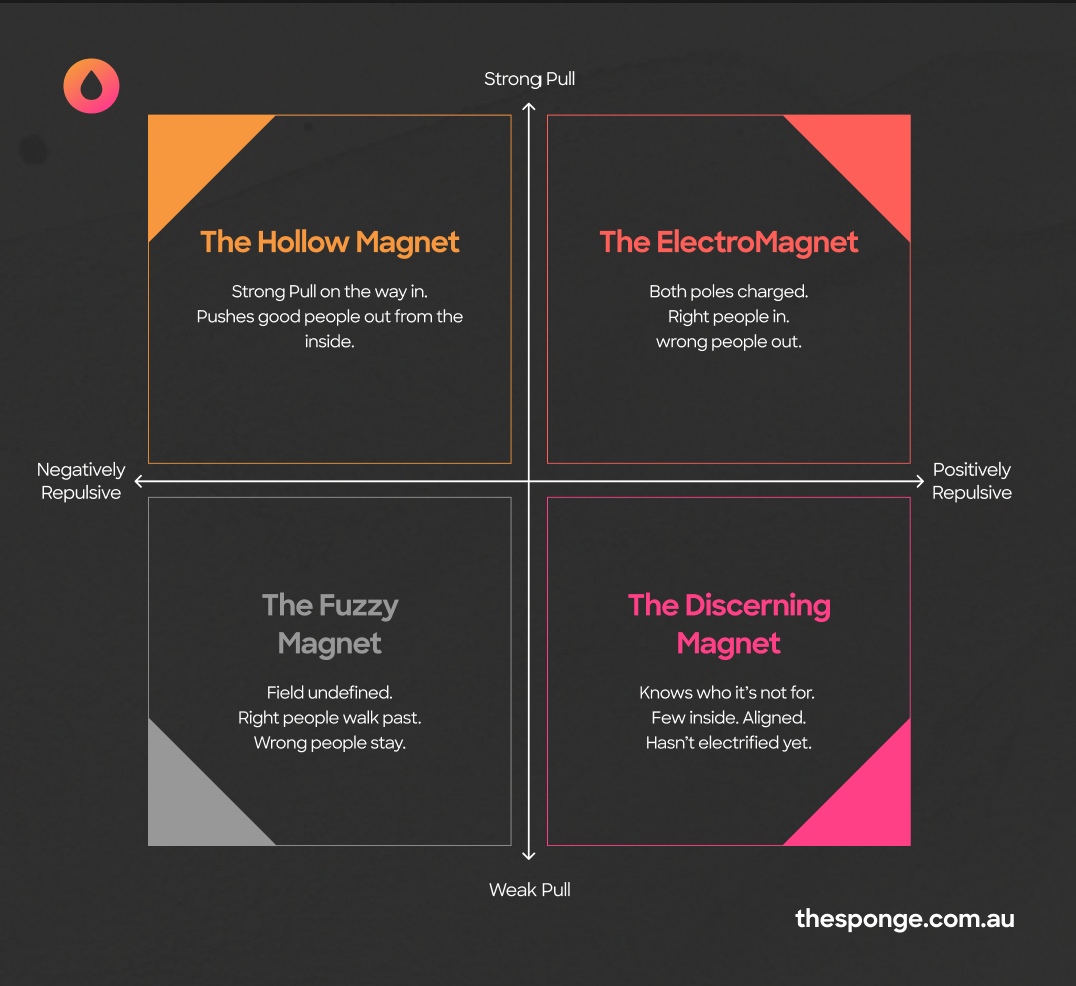
The Hollow Magnet
Strong pull. Negatively repulsive. The brand pulls hard on the way in but pushes good people out from the inside. Loud marketing. Strong recruitment. The promise is bigger than the reality. Six months in, the good ones quietly start looking. High recruitment. High churn.
The ElectroMagnet
Strong pull. Positively repulsive. Both poles charged. Both intentional. The right people in. The wrong people out. The team hums. Hiring is easy. The wrong fits self-select out before anyone has the conversation. The goal state. Rare.
The Fuzzy Magnet
Weak pull. Negatively repulsive. Trying to be everything to everyone. The pull is weak because nothing’s clearly defined. The push happens because people who want clarity can’t find any. The right people walk past. The wrong people stay. Where most businesses sit.
The Discerning Magnet
Weak pull. Positively repulsive. Knows exactly who it’s not for. Walls up on purpose. The few inside are deeply aligned. The pull side is underdeveloped. Could grow. Hasn’t electrified yet.
The hardest part is that most owners can’t see which one they’re in. The brand is doing its work whether they’re paying attention or not.
The question isn’t whether your magnet is pulling and pushing. It is. The question is whether you’re doing it intentionally.
What this work actually involves
This isn’t a logo refresh. It’s not a website rebuild dressed up as strategy.
A rebrand that changes who’s on your team starts with the foundations. Purpose. Values with context. Standards that the brand can hold even when no one’s enforcing them. The kind of work that takes months, not weeks. Done with the founder and the leadership team, not for them.
The visible rebrand comes after. The new identity, the new website, the new way the business shows up in the market. By that point the work has already been done. The standard is set. The brand becomes the carrier of it.
This is what it looks like to do a rebrand that actually changes who’s on your team. (What a rebrand actually involves)
It’s also the reason Tom’s story landed in three months. The foundations were done first.
Where to start
If you’ve been carrying this without knowing what to call it, you’re not alone. Most founders and seasoned business owners have lived a version of Tom’s story. Some are still living the first half.
Before you rebrand. Before you brief an agency. Before you do anything visible.
Find out what your brand is actually pulling and pushing right now.
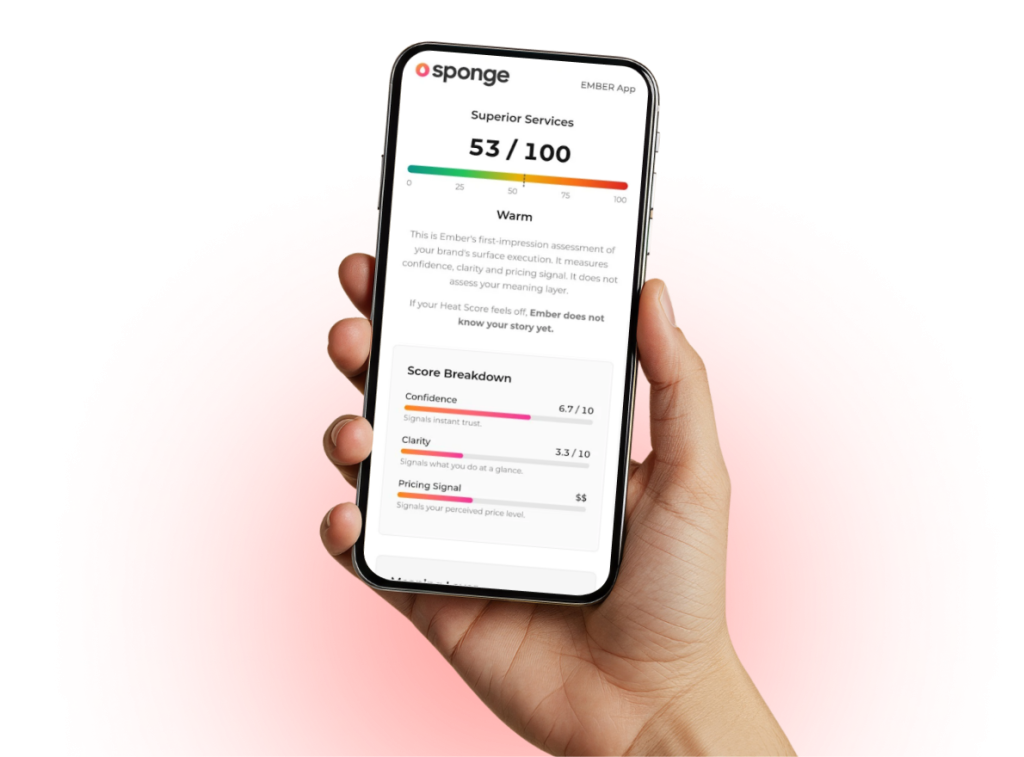
Run your free brand check at Ember
It takes about three minutes. You’ll get a heat score on your brand’s first impression and a sense of what the market actually feels when they meet you. It won’t fix anything. It will show you whether your magnet is working at the strength you think it is.
Most people are surprised. Some are relieved. A few are bothered enough to do something about it.
Frequently asked questions about rebranding and team change
Will rebranding cause people to leave?
Sometimes, yes. When a rebrand is done from the foundations up, the standard the brand carries becomes clear. People who don’t fit that standard often leave on their own. This usually happens cleanly, without forced exits, because the brand itself does the work of making the misalignment visible.
How long does it take to see changes in the team after a rebrand?
In Tom’s case, three months. Foundation rebrands done with rigour can show team changes within a quarter, because the standard becomes embedded in how the business operates day to day, not just in how it looks.
Is this just a culture problem, not a brand problem?
They’re the same problem. Tony Hsieh’s principle, “your culture is your brand,” means the lived experience of your business is what the market and your team feel. Brand and culture aren’t separate disciplines. A rebrand that doesn’t address culture isn’t a rebrand. It’s a redesign.
What’s the difference between a rebrand and a logo refresh?
A logo refresh updates the visible identity. A rebrand from the foundations up addresses purpose, values with context, standards, and how the brand carries those into every interaction. The logo and visible identity come at the end of a real rebrand, not the start.
Why do good people leave even when nothing has changed?
Because the market changes around you. A brand that pulls strongly in a vacuum can feel weak the moment stronger brands enter the space. Your magnet didn’t get worse. The competing forces got stronger. Top talent reads the misalignment and moves to brands that pull harder.
How do I know if my brand needs a rebrand?
Most founders sense it before they can name it. The signs include hiring becoming harder, people leaving for reasons that don’t quite add up, and a feeling that the brand isn’t keeping up with where the business actually is. The Ember brand check gives you a heat score on your brand’s first impression in about three minutes.
What kind of magnet is my brand?
Most brands are one of four kinds. The Hollow Magnet pulls hard but pushes good people away once they’re inside. The Fuzzy Magnet is trying to be everything to everyone, so the right people walk past. The Discerning Magnet knows exactly who it’s not for but hasn’t grown its pull yet. The ElectroMagnet has both poles charged and intentional, attracting the right people and repelling the wrong ones at the same time. The ElectroMagnet is the goal state. Most businesses don’t start there.
Until next time, be unapologetically awesome.
Luke Faccini is the founder of Sponge, a brand strategy and culture practice based in Brisbane. He has spent 27 years helping founders and seasoned business owners build ElectroMagnetic brands that do the heavy lifting before anyone says a word. He is the author of The Humming Team and the creator of Ember, an AI intelligence built on the proprietary ElectroMagnetic Brand Analysis framework.

Related Posts
What is Rebrand Readiness?
What Is the Difference Between a Brand Refresh and a Rebrand?
How Much Does a Rebrand Cost in Australia?
Why AI Search Has Rewritten How Founders Find Branding Agencies in Australia
The Quiet Crisis in Australian Branding: Two Bad Options
What Every Australian Founder Should Know Before Choosing a Branding Agency
Rebrand to the business of your dreams, not the one stealing your sleep.
How to Know If Your Content Strategy Is Actually Working
Why the Brand That Got You Here Can't Get You There




 We’re fanatics about culture and impact. Through our client work and our Business for Good initiatives via the GoodNorth community, we strive to create real, positive impact together.